














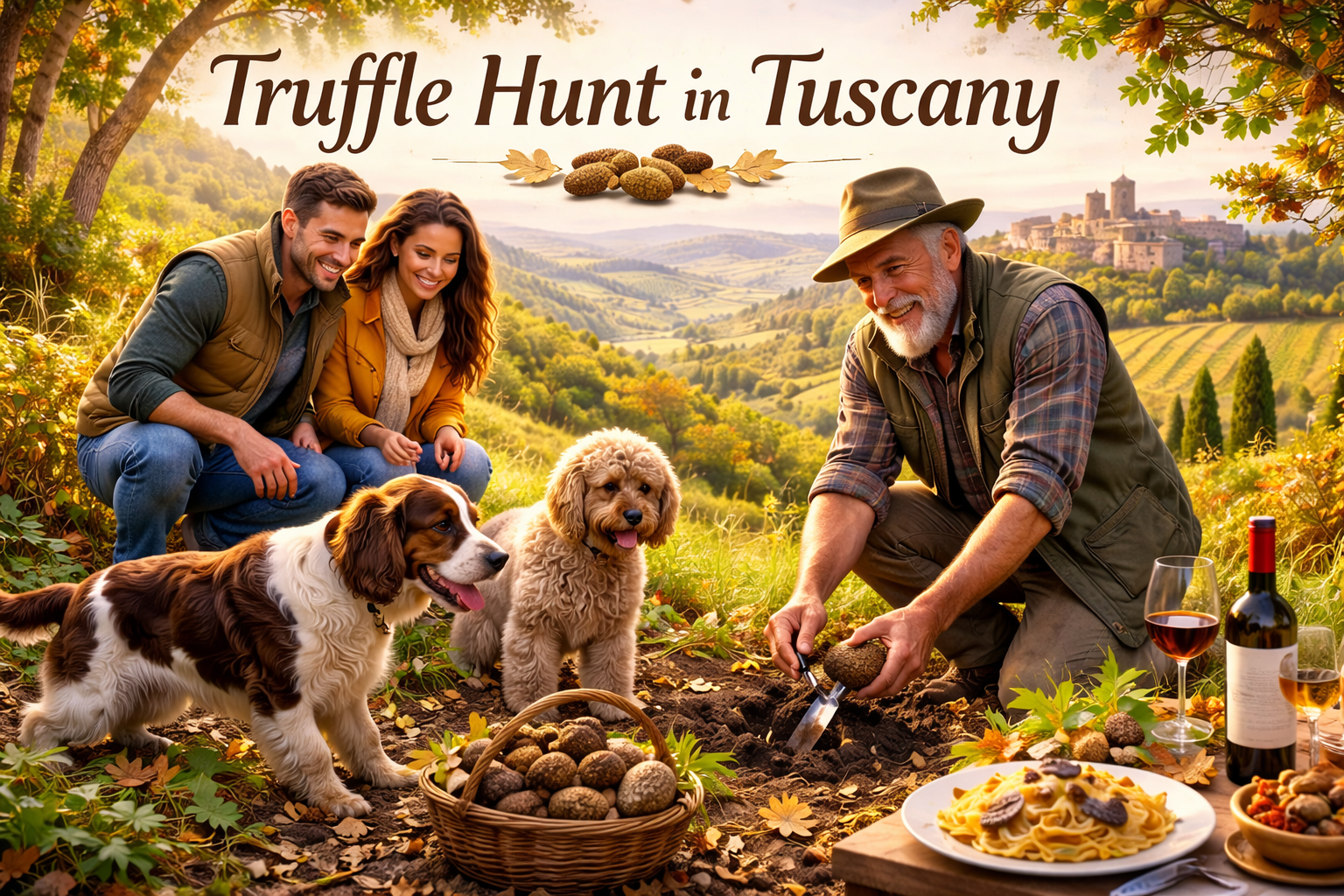
Discover the Magic of Truffle Hunting
Experience the tradition, flavors, and countryside charm of a truffle hunt in Tuscany with this complete travel and culinary guide.
Introduction
A truffle hunt in Tuscany offers travelers a rare opportunity to connect with nature, tradition, and authentic Italian cuisine. Nestled among rolling hills, vineyards, and ancient oak forests, Tuscany is one of the world’s most celebrated regions for truffle hunting. This age-old practice combines skilled hunters, specially trained dogs, and the earthy aroma of one of the most prized culinary treasures on the planet.
For food lovers, adventurers, and cultural explorers alike, planning a truffle hunt in Tuscany is more than just a tour activity—it is an immersive experience that blends gastronomy, history, and rural heritage.
What Is a Truffle Hunt in Tuscany?
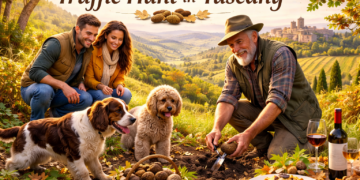
A truffle hunt in Tuscany is a guided excursion led by an experienced truffle hunter, often accompanied by trained dogs. These dogs are specially trained to detect the strong scent of truffles hidden beneath the soil near the roots of trees such as oak, hazel, and poplar.
Traditionally, pigs were used for hunting truffles, but today dogs are preferred because they are easier to train and handle. Joining a truffle hunt in Tuscany means walking through scenic woodlands while learning about the ecosystem that allows truffles to grow naturally.
Truffles are a type of underground fungus highly valued in Italian cuisine. Their rarity, intense aroma, and unique flavor make them one of the most expensive ingredients in the world.
The History Behind the Tradition
The tradition of truffle hunting dates back centuries in Italy. While regions like Piedmont are famous for white truffles, Tuscany is well known for both black and white varieties. Historical records show that nobles and aristocrats once prized truffles as luxurious delicacies served at royal banquets.
Over time, what began as a rural practice for farmers evolved into a culinary symbol of prestige. Today, a truffle hunt in Tuscany allows visitors to witness a living tradition passed down through generations.
Types of Truffles Found in Tuscany
Tuscany produces several varieties of truffles throughout the year. The most common include:
- White Truffle (Tuber magnatum) – Highly aromatic and rare
- Black Winter Truffle (Tuber melanosporum) – Rich and earthy
- Summer Truffle (Tuber aestivum) – Milder flavor
Timing your truffle hunt in Tuscany correctly ensures the best chance of finding fresh truffles during peak season.
Best Seasons for Truffle Hunting
Different truffle varieties grow during specific months. Below is a helpful guide:
| Truffle Type | Season | Flavor Profile | Best Areas in Tuscany |
| White Truffle | Sept – Dec | Intense, garlicky | San Miniato, Crete Senesi |
| Black Winter Truffle | Nov – Mar | Rich, earthy | Chianti, Mugello |
| Summer Truffle | May – Aug | Light, nutty | Val d’Orcia, Siena |
Choosing the right season enhances your chances of success and improves the overall experience of your truffle hunt in Tuscany.
What to Expect During the Experience
During a truffle hunt in Tuscany, participants typically meet their guide in a rural village or farmhouse. After a short introduction, the group heads into the forest alongside the trained dogs. The dogs sniff the ground, searching for the distinctive scent of truffles buried beneath the surface.
Once a dog identifies a promising spot, the hunter carefully digs into the soil using a small tool to extract the truffle without damaging it. Guests often have the opportunity to hold and smell freshly uncovered truffles—a memorable sensory experience.
Beyond the hunt itself, guides usually explain:
- How truffles form underground
- The relationship between tree roots and fungi
- Sustainable harvesting techniques
- The role of climate and soil conditions
The peaceful Tuscan countryside adds beauty to the adventure, making the journey as rewarding as the discovery.
Culinary Delights After the Hunt
One of the highlights after a truffle hunt in Tuscany is the meal that often follows. Many tours include a farm-to-table tasting at a local agriturismo (farm stay). Fresh truffles are shaved over homemade pasta, risotto, eggs, or bruschetta.
Paired with regional wines such as Chianti or Brunello di Montalcino, the flavors create an unforgettable dining experience. Learning how freshly harvested truffles elevate simple dishes helps visitors understand why these fungi are so highly valued.
Cultural and Educational Value
Participating in a truffle hunt in Tuscany is not only about food. It also provides insight into rural Tuscan life. Many truffle hunters have inherited their knowledge from parents and grandparents, maintaining a strong connection to the land.
Visitors gain appreciation for:
- Traditional farming practices
- Local biodiversity
- Sustainable land management
- The bond between handler and dog
The activity supports small communities and preserves an important regional heritage.
How to Plan Your Trip
To book a truffle hunt in Tuscany, travelers can choose from private tours, small group excursions, or luxury culinary packages. Prices vary depending on the season, duration, and whether a meal is included.
Here are some planning tips:
- Wear comfortable walking shoes
- Dress appropriately for forest terrain
- Book during peak truffle season
- Confirm whether food and wine tastings are included
- Choose licensed and experienced guides
Many tours are available near Florence, Siena, and Pisa, making it easy to combine truffle hunting with sightseeing.
Why It’s a Must-Try Experience
Few culinary adventures compare to the authenticity and charm of searching for hidden treasures beneath Tuscan soil. The combination of scenic landscapes, expert guidance, and gourmet rewards makes the experience truly unique.
Whether you are a passionate foodie or simply seeking something different, few adventures rival a truffle hunt in Tuscany. It is an activity that engages all the senses—sight, smell, taste, and touch—while creating lasting memories.
Frequently Asked Questions (FAQ)
1. How long does a truffle hunt last?
Most experiences last between 2 to 4 hours, including the forest walk and optional meal.
2. Do I need special equipment?
No special equipment is required. Comfortable shoes and weather-appropriate clothing are sufficient.
3. Are children allowed to join?
Many tours are family-friendly, but it is best to confirm with the provider beforehand.
4. Can I keep the truffles we find?
Policies vary by tour operator. Some include small samples, while others use them for the group meal.
5. Is truffle hunting available year-round?
Yes, but availability depends on the truffle season. Different varieties grow at different times of the year.
Conclusion
From the thrill of discovery to the pleasure of tasting freshly shaved truffles, Tuscany offers an extraordinary blend of tradition and gastronomy. The rolling hills, medieval villages, and welcoming locals create the perfect backdrop for this timeless practice.
If you are planning your next Italian getaway, consider adding this authentic countryside adventure to your itinerary. A journey into the forests of Tuscany may just become the highlight of your trip.